

The Internet of Things for Smart Water Network Management: from supply to distribution
According to the Sustainable Development Goals included in the 2030 Agenda signed by the 193 UN member countries, one of the planned milestones is represented by Improvement of Water Management through sustainable and efficient practices.
In the 2019 report of the Italian Alliance for Sustainable Developmentand Italy, despite having already partially achieved the objectives set by the Agenda, presents Not a few critical issues in water resource management.
In fact, our country holds the record among European Union countries for the Maximum water withdrawal for potable use per capita: in 2015, 4.9 billion cubic metres of water were supplied to users, equivalent to 220 litres per inhabitant per day. Added to this figure is another negative trend, namely the progressive deterioration in the efficiency of the distribution network of drinking water.
The change in pace towards modernising substandard infrastructure is therefore the main driver for reversing this negative trend in Integrated Water Services.
We often hear about Smart Cities these days, and in the case of water, “Smart” involves making water supply and distribution intelligent using Internet of Things (IoT) technologies, to allow for mutual connection and communication with other parts of the system and the city.
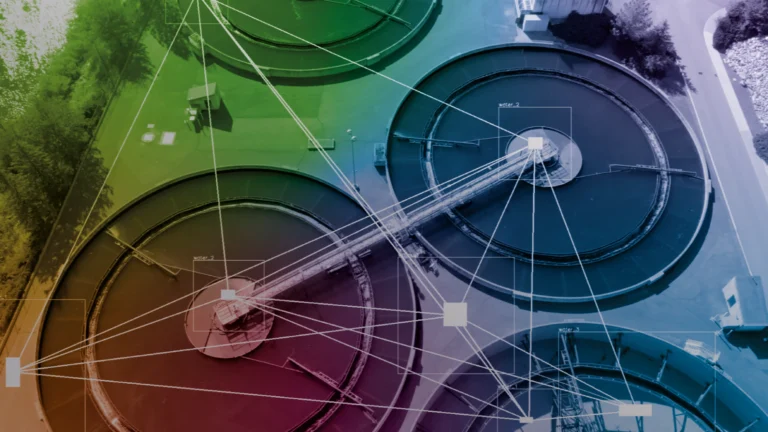
Smart water systems use IoT-enabled sensors to collect real-time data and generate a “digital twin” – that is, a digital replica of the physical infrastructure in the area – thereby enabling modern, optimised management. This allows for a’optimisation of water infrastructure through the detection of leaks in the network, leaks at consumer premises, flow rates, pressures, or the monitoring of water distribution across the network and enables operators to make more informed decisions regarding water resource management. The processes currently underway at many water utilities – involving the division of networks into districts and the modelling of water networks – cannot proceed without the increasing use of sensors on assets and the increasingly sophisticated processing of the data they generate.
Thanks to Integrated Solutions like SMAQ, developed by APK APPA, it is possible to detect leaks in the pipework, predict how the networks will perform in the face of future expansions, new developments, changes to operating pressure or pipe diameter, etc., and identify structural issues and solutions in advance, whilst planning the necessary upgrade investments accurately and in good time.
Such data is even more valuable when shared: water management teams, for example, can use predictive technologies to understand when and in which areas flooding is most likely to occur, before it actually happens. By sharing this information, transport authorities can warn people in advance of the risks and divert traffic accordingly. The predictive intelligence made possible by the IoT and big data will have a huge impact on cities, saving time and conserving resources.
These facilities, connected and integrated via native, public and standard IoT communication networks, will enable a significant water savings, thereby reducing losses due to malfunctions and breakdowns. Furthermore, will allow for savings on the bill for the private citizen and a reduction in waste, a fundamentally fundamental theme in a world that is becoming increasingly populated and which, until today, has treated natural resources as if they were infinite and guaranteed.
The benefits of SMAQ also extend to service users: IoT technology applied to smart water distribution infrastructure, such as digital water meters, allows you to monitor their consumption remotely via dedicated apps, web portals and innovative services. It can also alert them in the event of leaks, enabling them to resolve the issue promptly and thus avoid unnecessary wastage.
I water meters fitted with remote reading They help users become more aware of the need for more responsible use of the resource, and enable the operator to overcome the limitations imposed by the various solutions used to date to collect the relevant data (walk-by, drive-by, private radio networks, etc.).