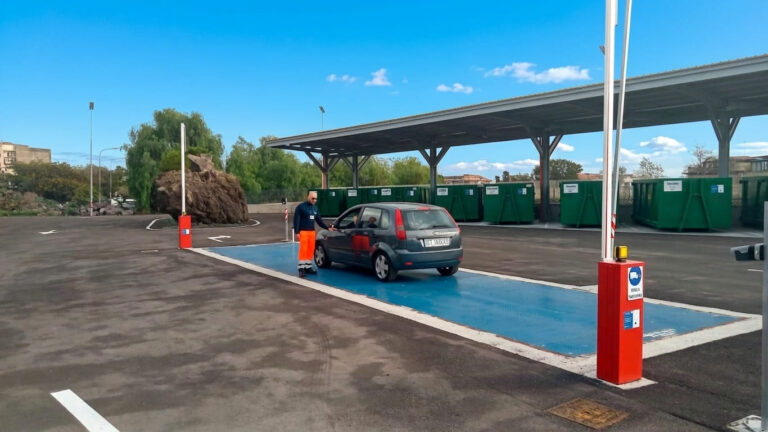


GFenvironment it is a national benchmark for public and private companies and for Local authorities in the matter of Waste management for environmental protection. Because waste can become a resource for the planet. Professor Giulio Ferrari, founder of the Emilian company and today an international point of reference in environmental matters, as well as one of the drafters of Presidential Decree 158, the Regulation laying down the rules for the development of the standardised method for defining the fee for the urban waste management service, has always been a firm believer in this.
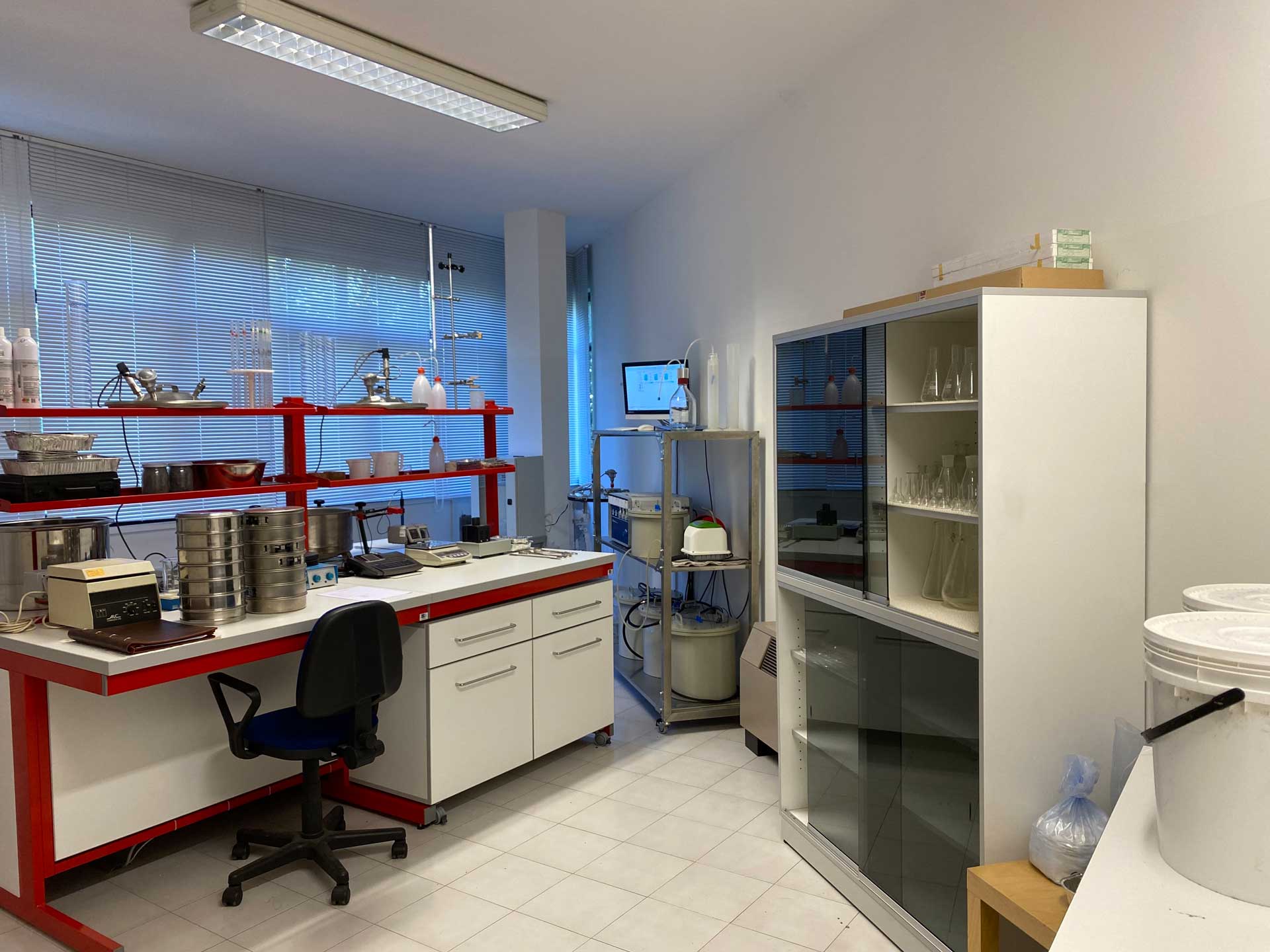
There are several Services GF Ambiente offers its users, perfected and gradually grown over more than three decades of activity. Among these, a Laboratory of analysis dedicated to the in-depth and specific examination of waste matrices and scraps, which increasingly qualifies the sector of waste management and treatment/disposal. In short, Technological innovation and scientific research as corporate action matrices alongside the Technological and IT competence acquired over the years, with the sole aim of offering a complete, customisable and state-of-the-art service.
An approach that becomes evident if you look at the diamond tip of the GFambiente proposal, The modular composting plant for the management of organic waste of biological origin. Because this is where the company's ability and professionalism are demonstrated, but above all the foresight and constant attention to improvement that it puts into its work, not only to offer an up-to-date service to its clients – after all, the rapid evolution of the subject itself requires keeping up with the times – but above all to do Really Turning waste into a resource to be exploited for environmental protection.
“The first modular composting plant was created 25 years ago in Republic of San Marino – he tells us the Dr Riccardo Ferrari –, at the time, modular composting plants were little or not discussed at all; but thanks to the experience gained in the field, Prof. Ferrari decided to start an experimental project with a first module which, over the years, was gradually perfected and expanded with other modules, to become a a plant capable of processing 100% of organic material from municipal waste collection. A successful solution that has been exported over time to different regional areas of our country, above all’Lazio and Campania region.”
Where is the Go of this system? In the meantime, precisely in the possibility of customise the system based on the real needs of the area in which it will operate, by adding custom-built modules – obviously we are talking about realities within certain dimensions in terms of population size and therefore the quantity of waste produced to be treated. And then in principle of operation the same, one patented biofiltration system capable of providing the right percentage of oxygen to the putrescible mass to favour the composting process. Specifically, the plant is characterised by emission management according to a Brand new technology ensures the elimination of any odours; low energy consumption and low creation and maintenance costs; short material retention times with the possibility of installation in small spaces and ease of management and automatic controls during all process phases.
But what are the phases of a Composting processDr. Ferrari briefly explains to them:
“The starting point, of course, is the correct and timely separate collection of organic waste, upon which a careful goods analysis is carried out to verify the absence of any non-biodegradable scraps.
At this point, a substrate is formed by mixing canteen waste with high-carbon lignocellulosic residues (prunings, wood shavings, etc.) to achieve the correct carbon/nitrogen ratio and moisture content.
This operation correctly activates the bio-oxidation process, avoiding the possible causes of anaerobiosis, which would be disastrous for the composting process.
Once these preliminary operations are completed, the substrate is inserted into the body of the biocella and subjected to forced aeration, to activate the degradation process of the organic fraction (mineralisation and humification).
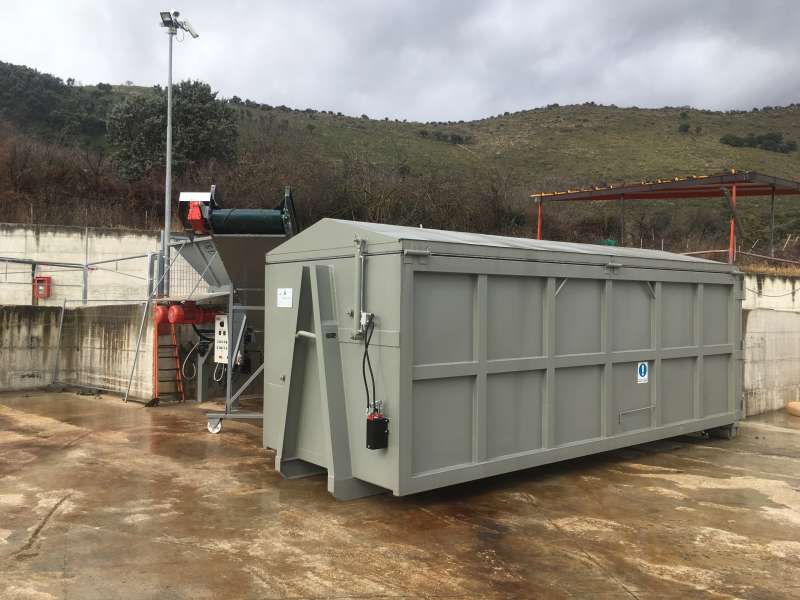
After approximately 30 days, the substrate (canteen waste + lignocellulosic materials) is discharged from inside the biocell onto a suitable area where it remains in adequately sized piles for a further 30 days (maturation phase) to then be sieved and sent for final use as a mixed composted soil conditioner.
All stages of composting are monitored using specific software which, in addition to verifying the correct progress of the process, provides all useful real-time information for restoring normality in the event of anomalies.
Worth remembering that in Italy, the transformation of organic waste fractions into compost for use as fertiliser represents a recovery process expressly provided for by Directive 91/156, which mentions the recycling/recovery of organic substances, including composting operations and other biological treatments.
I benefits Of this choice there are many, for the user itself – primarily with a TARI reduction – and for the environment, obviously. “Biodegradable organic matter is indeed a fundamental resource for maintaining the balance between the plant and animal worlds – concludes Dr. Ferrari – which is why the recycling of canteen, agri-food waste and green maintenance waste is one of the priorities to consider in the management of urban and similar waste. This is why we have specialised in the design and implementation, on a turnkey basis, of a modular plant based on innovative technology, of great simplicity and reliability, capable of providing a product that is easily handled and reusable in agriculture”.
For more information on GFambiente's activities, please visit the website www.gfambiente.it.